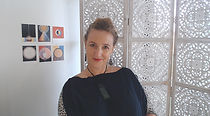
Reflecting on a Global Journey: Why I'm So Interested in Global Citizenship

As I continue to explore themes of belonging and identity in my Living Between Worlds series, I find it useful to look back at where these questions began for me. In this post, from 2011 when I was living in Granada, I share more of the roots of my curiosity about global identity—shaped by a childhood steeped in cultural diversity (be that from a privileged position) and a life lived across many borders.
At the time, I was beginning to realise that my sense of “home” couldn’t be confined to a single place or culture. This early reflection still resonates deeply with me as I navigate the intersections of being Pākehā, a New Zealander, and a global citizen—roles that are at the heart of my work today.
The questions I grappled with then — about identity, belonging, and the complexities of living across cultures—are still ones I continue to explore. Here’s a look back at how this journey first unfolded.

Why I'm So Interested in Global Citizenship
Originally posted on January 27, 2011 - https://globalidentity.wordpress.com/
Looking back, this probably should’ve been my first blog post! After exploring many blogs lately, I’ve noticed the ones that draw me in are those that offer a glimpse into the writer’s world. Understanding their journey gives depth to their perspective. So with that in mind, I thought I’d share a bit of mine. I’m a New Zealander by birth, born into a strong lineage of British colonial heritage, with all that brings with it, for good and bad.
Like many Pākehā (non-Māori) New Zealanders, my family has Celtic roots—Irish and Scottish. I carry the Macdonald name, red hair, and what my mother lovingly(slight side eye) called “big bones”—the kind of woman, she said, who could’ve starred in Braveheart. One great-grandfather was born in colonial India and sent back to Britain at age four, his father living out his life in the heyday of the British Empire. That colonial legacy comes with both weight and wanderlust. I believe many Kiwis carry a traveller’s spirit—our ancestors ventured far to settle in Aotearoa, drawn by promises as grand and dramatic as any Booker Prize novel.
My parents certainly carried that spirit. They spent over 35 years living abroad, mostly in Southeast Asia. My sister was born in Thailand, my brother in Borneo, and I—11 years later—arrived as the “surprise baby” during a brief chapter back in Aotearoa. When I was just two and a half, we moved to Singapore, while my older siblings stayed behind at boarding school. Singapore shaped me deeply. My memories are full of colour, scent, sound—curry puffs with my dad, festivals like Deepavali and Chinese New Year, and the call to prayer drifting from the mosque. I watched Nora, our home helper, pray quietly each day. I remember the magic ring of the Dutch Club waiter, the smells of the “smelly market,” and the excitement of picking up my siblings at Changi Airport (which I called the “ice cream” for its towering dome).
Those early experiences immersed me in a world of cultural diversity, planting the seeds of my lifelong curiosity. Later we moved to Hong Kong. From ages 9 to 11 I lived there before heading to boarding school in New Zealand. Life in Hong Kong was a whirlwind—busy, vibrant, intense. I remember Arlene, who lived and worked with us, looking after me, I saw her as an aunty. We shared laughter, football matches, meals, and conversations in the kitchen, while my parents were out. She was from the Philippines, and we stayed in touch, but as life weaved its way we lost touch.
During school holidays, while my Hong Kong friends were still in class, I’d travel with my parents—Thailand, Vietnam, China, India, the Philippines. My dad and I would ride the MRT (or was it MTR?) just to see where the lines ended. My mum ran a home-based silver business, transforming our apartment into a showroom. Those days were full of life, commerce, and connection. I was there for the 1997 handover of Hong Kong—a powerful, symbolic end to a chapter of British colonial history. An eye opener at 17 and the last year we were as a family in Hong Kong.
Boarding school in New Zealand brought its own education, far beyond academics. I lived with 50 girls aged 11–17 and was swept into early adolescence with all its intensity. Weekends and holidays were spent with other families, friends, and occasionally my older siblings. I truly experienced what it means to be raised by a village. My parents were my anchors, but many others helped shape who I became. After seven years of school, I craved a different kind of learning. I took a gap year, landing in Somerset just before my 18th birthday to work in a boarding school (yes—back into the fire!). It was there I discovered a passion for human rights and alternative education—ironically, while working inside a very traditional system.
That sparked what I like to call my “university of life” years - possibility a little lost years!!!: travelling through the UK, Europe (where I remember the people more than the places), and back to Aotearoa. Study didn’t stick, so I headed to Australia—picking fruit, falling in love, learning to spin fire, hitchhiking through the Outback, and connecting with Aboriginal communities in Darwin. I was 20, soaking up every experience. Eventually I found myself travelling solo through Southeast Asia—from Singapore to Thailand—on a journey that felt like a rite of passage. It began at my dad’s 60th birthday on a small island off Singapore. I remember being dropped at the train station, filled with utter joy and anticipation. Over four months, I journeyed freely, protected (I believe) by unseen forces.
On the banks of the Mekong in Luang Prabang, Laos, I met the man who would become the father of my daughter, Nikita. That story brought me to London, living with my brother for the first time since I was a toddler, then to Greece, where we lived a bohemian life in Lefkada. It was there—two years before she was conceived—that Nikita’s name found us. The child we said we would one day have (in full romance mode), the daughter of a Chilean and New Zealander.
Returning to Aotearoa in 2003 was hard. Everything had changed. I felt detached, in a haze of identity confusion. But in 2004, Nikita was conceived. Just weeks earlier, I’d been hitchhiking in the South Island, surrounded by mothers and children. At a party, someone told me I’d be pregnant soon—odd, as I hadn’t seen her father in ages. But sure enough, on 6 October 2004 at 3am, Nikita Toledo Macdonald was born.
With her came clarity.
By 2006 I was a solo parent, working as a support teacher in an alternative education college—a life-changing experience. I learned that relationships take time, and that building community is perhaps the most valuable skill anyone can have. Wellington became my true home—the first place in Aotearoa where I felt rooted. But the adventure itch hadn’t gone. Nikita and I moved to Chiang Mai, Thailand, to work at a school for hill tribe children. She was two and a half—the same age I’d been when I first left New Zealand.

We lived with 30 kids, teachers, and volunteers. It was intense and beautiful. Every three months, we’d do visa runs to Burma—an adventure in itself with a toddler! It was there I began to understand the complexity of development work and the politics of “helping.” And it was there I met my future husband, Dani, one night out in Chiang Mai.
Eventually, I returned to Wellington to study properly—this time at Victoria University. But my gut led me elsewhere. I left halfway through to move to Spain with Dani. Nikita and I have now been in Granada for over a year. Every day, I grow more fascinated by life here.
Aotearoa is my tūrangawaewae—my place to stand—but I think you can now see why I’m drawn to the idea of global identity and citizenship. It’s not just an interest. It’s the story of my life.


Comments